RAIZ
Notes on internationalism from Colombia, for a conversation that continues.
From Gaza to Cauca, the mountains of Kurdistan to the working-class neighbourhoods of Santiago de Chile, from the Indigenous communities resisting the extractive advance to the urban youth who discover an unexpected form of dignity in the streets; Something is breaking and being born all at once.
There are historical moments in which we find ourselves confronted with a question too pressing to ignore. Not because it is new, on the contrary: Because it comes back again and again. Wherever peoples try to respond to forms of domination that, though they change their face, keep a common structure, the question of internationalism possesses this quality.
To situate this conversation, social and grassroots processes of diverse trajectories that inhabit Colombian territory —grassroots organizations, feminist experiences, Indigenous and Afro-descendant communities, community media spaces, revolutionary militancies and processes of territorial organization— have come together. Although we do not share a single strategy or a single political tradition, we gather around a common concern: internationalism. That is, the deep awareness that the limits imposed by national borders cannot be the limit of our proposals for change. Internationalism has to be understood not as an option, but as a necessity.
During the month of May we convened about the Internationalist Manifesto, “Revolutions of Our Time. The Peoples Want”, a collective effort to read the historical moment we are living through from experiences of resistance scattered across multiple geographies. The slogan “the people want the fall of the regime,” born in the Arab uprisings, during the outbursts of the region’s different peoples, when thousands made their voices heard in the streets, lies not only in its capacity to name a rupture, but in the possibility of recognizing a shared horizon among struggles that, confront common forms of domination. To speak of internationalism today implies precisely that: trying to build bonds, language and articulations that cross borders, territories and bodies. In the face of a system that operates on a global scale, isolated resistances prove insufficient.
Building an internationalism that does not repeat the mistakes of the past
The old world continues to govern, but it has ceased to convince. The new one has yet to define its manifestation. Perhaps that is why the word internationalism runs through the conversations of those who struggle. All peoples seem to be learning that no local struggle stays local for long. The mining that destroys a mountain answers to decisions taken in distant offices. The public debt that conditions entire governments is designed outside national borders. Wars, displacements, forced migrations, the plunder of the commons and ecological devastation are part of one and the same global architecture. Capitalism learned long ago to organize itself internationally. It falls to us, the peoples, to take up the same task for our cause.
When we speak of internationalism, we are not speaking of a concept belonging to the past, nor to great vanished organizations or to revolutionary projects that failed to sustain themselves, ending up being absorbed by the very machinations they sought to combat. Internationalism cannot be reduced to symbolic gestures of solidarity or to cooperation networks incapable of altering the real balances of power.
What does internationalism mean when millions of people march on every continent and, even so, the machinery of war keeps advancing? The question hurts precisely because it reveals a truth. The peoples of the world have shown an enormous capacity for empathy. What we have not yet built is an equivalent capacity for power. That realization silently runs through all the struggles of our time. Reading about the revolts of recent years, seeking answers, one thing stands out: They occur in contexts where we are particularly weak as internationalist networks.
The question that brings us together is not whether coordination among peoples is needed. The question is how to build it. If anything constitutes a red thread in this conversation, it is the recognition that we are living through a systemic crisis. It is not only an economic crisis, nor just a political one. What we are all attempting to define in our own language is a convergence of crises: capitalism, colonialism, patriarchy, racism and imperialism operating simultaneously as forms of organizing the world.
Behind every incarnation of fascism lies a failed revolution
The shared feeling is that the current order does not only produce inequality. It also produces uprootedness, fragmentation, war, ecological devastation and a profound inability to imagine different futures. Fascism returns to try to dominate ideas, but behind the emergence of fascism there are failed revolutions. Our task: to prevent it, to create a rupture with the mentality that capitalism imposes on us, to keep human beings from being severed from one another and to stop the destruction of Mother Earth, of our territories, of our projects and of our lives.
We reject the idea that revolts fail because they do not take power. The insurrections of the last decade in Latin America, as well as multiple uprisings around the world must be read beyond their institutional results. Instead they must be evaluated by the processes they set in motion. Insurrections open possibilities that seemed impossible before. They interrupt projects of domination, force power structures that seemed invulnerable to react, generate new subjectivities, shared languages, create unexpected forms of organization. Perhaps that is the deepest power of revolts. They do not only challenge governments, they challenge common sense; they open cracks in what seemed immovable and, although they often do not culminate in successful revolution. These struggles transform those who pass through them. After an insurrection, the world can no longer be viewed the same.
Resistance has prevented capitalism from fully becoming what it claims to be. Although it presents itself as an overwhelming machination, capable of expanding and absorbing everything, it is constantly forced to confront what it seeks to reduce or marginalize. Therein lies one of its paradoxes: It must devote time, resources and attention to actions that seem insignificant. It may seem minor that oil wells are set ablaze to defend a territory, that a refinery’s facilities are occupied, or even that a slogan appears on a wall; and yet, if these actions were truly irrelevant there would be no urgency to smother, evict or erase them. Precisely because these actions interrupt, question and expose the limits of its dominion, capitalism never manages to fully realize its claim to totality.
A similar lesson comes to us by way of the mountains of Kurdistan. For decades, the Kurdish people have resisted the denial of their existence, state persecution, military invasions and international isolation. Yet, in the midst of that history of siege, they have also managed to provide an important experience embodied in their proposal of Democratic Confederalism. Rojava, as a realization of peoples’ emancipatory political projects, stands as living proof. Proof that it is possible to imagine forms of organization that do not exactly reproduce the models inherited from the nation-state; Proof that democracy can exist as a daily practice and not only as an electoral process; proof that the emancipation of women is not a secondary matter but a condition of any project of social transformation; proof that revolution does not belong to the past. It remains a deeply human possibility.
Abya Yala is another example of how peoples refuse to keep quiet. This continent has spent centuries producing forms of insubordination. The Indigenous peoples who defended their territories against colonization, the Black communities that built spaces of freedom in the midst of slavery, the peasant struggles for land, the popular insurrections, the community experiences that survived dictatorships, wars and displacements. In Colombia’s case, social struggles have been historically inspired by different currents. From student activism to the Indigenous law of origin, through the framework of Afro-descendant cosmovision to an Indo-American Marxism. There is a long memory of resistance, much older than any of our organizations, much older than our States, much older than our defeats.
The front lines, the community guards, the territorial occupations, the networks of care and resistance, the repertoires of action that appear simultaneously in places far from one another suggest something that runs through the whole conversation: Peoples speak to one another even when there is no formal coordination among them or a centralized organization. Often they do so through a collective intelligence that emerges in moments of crisis.
Perhaps one of domination’s greatest triumphs has been to convince us that we are always starting from scratch, that each generation must invent everything anew, that our struggles lack roots. It is enough to listen carefully to discover that peoples have been sharing their realities for centuries.
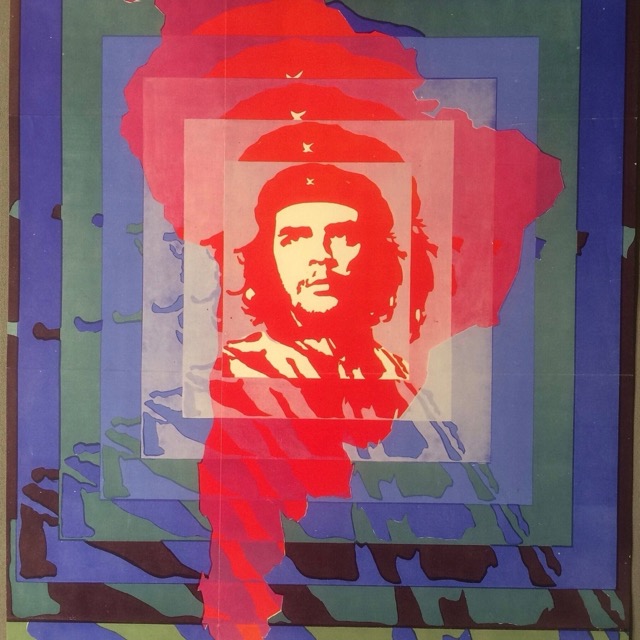
In this context another consensus is built: the need to recover the idea of revolution as a horizon, as a promise of a future. Progressivism has spent decades convincing us that the way out of the civilizational crisis is a capitalism with a humane face, capable of solving the crises that capital itself created. And little by little it has displaced the language of radical transformation with an ever more limited vocabulary. Reforms replaced structural transformations. Management replaced conflict. Governability replaced emancipation. And progressivism, even when it provided opportunity in the moment, ended up incapable of responding to the deep causes of the crisis. This critique does not point only at specific governments. It points at a political logic that seems incapable of imagining a rupture with the fundamental structures of the system. And that is why we can never cease to talk about revolution and keep it, as Che taught us, in our hearts.
Organizing for revolution
In line with Indigenous cosmovisions, we stress that every element of life needs bonds in order to organize and exist. The universe itself is a form of organization. In the same way, we peoples need to build organizational frameworks that allow us to confront and overcome the chaos into which the capitalist system has plunged us. The more organized we are, the greater our capacity to exist fully. The less organized we are, the closer we come to disappearing.
We do not lack reason to struggle, we do not lack injustices or peoples in resistance to injustice. What we keep searching for are the forms capable of articulating all that scattered energy. Traditional organizations show signs of exhaustion; institutions absorb and neutralize conflicts; bureaucracies tend to reproduce themselves; progressivisms promise changes that rarely reach to the roots of a system. Meanwhile social movements oscillate constantly between moments of extraordinary expansion and moments of fragmentation.
To organize ourselves we need to unite. This begs fundamental questions: how do we build unity without denying diversity? How do we share horizons without imposing a single vision? How do we channel our differences into our strength?
There are multiple emancipatory political projects and diverse paths to reach them. Amongst these projects, and the paths they propose, there are also shared principles and values.
Beyond the differences, there are structural elements that reappear again and again: the socialization of the means of production, or the ways of producing and reproducing life autonomously, the self-management of liberated territories, the construction of collective forms of life and decision. These are questions that cut across different experiences and that allow us to recognize that oftentimes, we are on similar quests.
Internationalism is not something done for other peoples; it is a practice built from one’s own struggle, but in dialogue, articulation and interdependence with the struggles of other peoples. Each emancipatory process is nourished by its analogues. At the same time they all contribute to a common cause that transcends borders.
How we practice our resistance remains the responsibility of the peoples. To discover which revolutionary principles and practices we share, we need to meet. To meet on our territories, our knowledge and our ways of life. We need to recognize in one another, what we have in common beyond our seemingly diverging interests. These interests are often a consequence of geopolitical interests, in other words, the interests of our national bourgeoisies. In this sense we should not let ourselves be divided by our limited individual understanding of the world, but instead to build unity that takes into account our diversity. Our cause requires unity that transcends a singular reading of the world or a uniform way of acting.
Each community has a particular trajectory. Its experiences, its defeats and its victories are unique. Yet, there are also shared scenarios where we can meet and recognize one another. We need this unity to prevent a select few from having a very clear plan while the majority remain scattered; or the existence of multiple plans incapable of meaningful exchange with one another and condemned to permanent contradiction.
There is a shared intuition: diversity is not an obstacle to be overcome, but a condition of any possible internationalism. Peoples do not start from the same place, they do not face exactly the same contradictions nor do they possess the same organizational memory. To engage in the charade of artificial homogeneity would mean repeating mistakes that marked earlier experiences. The task is not to build uniformity, but to build unity and togetherness without erasing differences.
Perhaps one of the most hopeful answers is that peoples are already meeting, although not always through congresses, formal coordination or grand structures. They meet in the questions they ask, in the tactics they invent and in the languages that reappear simultaneously in distant places. They meet in the defense of water, in the recovery of seed, in the community guard, in the networks of care, in the struggles of women and gender dissidence, in the resistance to militarization and, above all, in the defense of life against a system that seems to have declared war on everything it cannot turn into a commodity. Peoples recognize one another because they face similar problems and because, in unexpected ways, they also begin to imagine similar answers.
However, we must also acknowledge the problems that appear in articulation and shared action. Sometimes the tactic —the how— ends up eclipsing the strategy —the horizon—. We miss the forest for the trees. An example can be seen in the processes of territorial recovery and self-government driven by Indigenous peoples, Afro-descendant communities and peasant sectors. These are valuable, necessary and deeply transformative experiences. However, when territory is coveted for the sake of territory and not for its defense or strategic transformation, it becomes an end in itself. There is a risk of losing sight of the structural conflict that runs through those territories. The problem ceases to be the territorial ambitions of capital and turns into an ordeal solely about the recognition of each particular space. There is nothing wrong with the path traveled; the challenge is to ask ourselves whether that path still points toward the horizon that gave rise to it.
Perhaps one of the most practical consensuses we can build is the language we use to define our experience and our ambition. We need to enshrine in common language the everyday dissatisfaction, the exhaustion through exploitative work, the sadness of a life beholden to the logic of markets, or the world’s apathy about the need for revolution. Building common language does not mean imposing identical answers for all peoples. Rather, it means creating bridges that allow us to recognize one another, understand one another and project shared horizons.
Perhaps therein lies one of the fundamental principles of an internationalist organization: the capacity to give a common name to what oppresses us and what we want to build, without renouncing the diversity of paths that each people chooses to achieve its own emancipation.
The struggle continues
There is another concern: the need to recover our own history. We have to recall the trajectories of resistance that exist in each territory: the history of Indigenous peoples, the Afro-descendant struggles, the peasant resistances, the popular insurrections, the memories erased by colonization. Recognizing these struggles is an indispensable source for imagining emancipatory futures that respond to the needs of the territory and of the peoples who inhabit it.
It is not about rejecting lessons that stem from other geographies; it is about ceasing to think that history always begins somewhere else. Perhaps the answers we seek do not need to be invented. We need to be looking for them wherever peoples have been resisting for centuries.
We do not impose a recipe for unity and internationalism. We leave initial notes, proposals and an open path yet to be traveled. Internationalism is not a fixed, finished structure, it is a historical task that demands listening more than directing. It asks us to learn rather than impose, demands weaving rather than centralizing, building trust before proclamations. We need to recognize that no people will be able to face the coming crises on its own, and that no international articulation will make sense if it does not follow from the concrete struggles that sustain life in each territory.
It is likely that the internationalism of the twenty-first century will not be born of a single doctrine or a single banner; perhaps it will resemble a constellation more than a structure. A constellation of struggles, of territories, of memories, of shared experiences. A patient weave of bonds capable of holding through the storms. The storms will continue: the ecological crises, the wars, the displacements, the new authoritarianisms, the renewed forms of fascism. Everything indicates that the century now beginning will be marked by conflicts even deeper than those we have known. It is precisely for that reason, that internationalism ceases to be merely optional, but becomes a matter of political and civilizational survival.
The question is no longer whether peoples need to meet; the question is whether we will be capable of organizing ourselves before the forces that seek to destroy life finish reorganizing the world in their image.
Somewhere between Palestine and Cauca, between Rojava and the Andes, between the communities that defend seeds and those who defend neighborhoods, between those who resist military occupations and those who resist extractivism, between those who remember and those who are only just beginning to organize, a conversation is beginning.
Peoples are seeking one another again, and every time peoples meet again, history is forced to examine its determinism.